
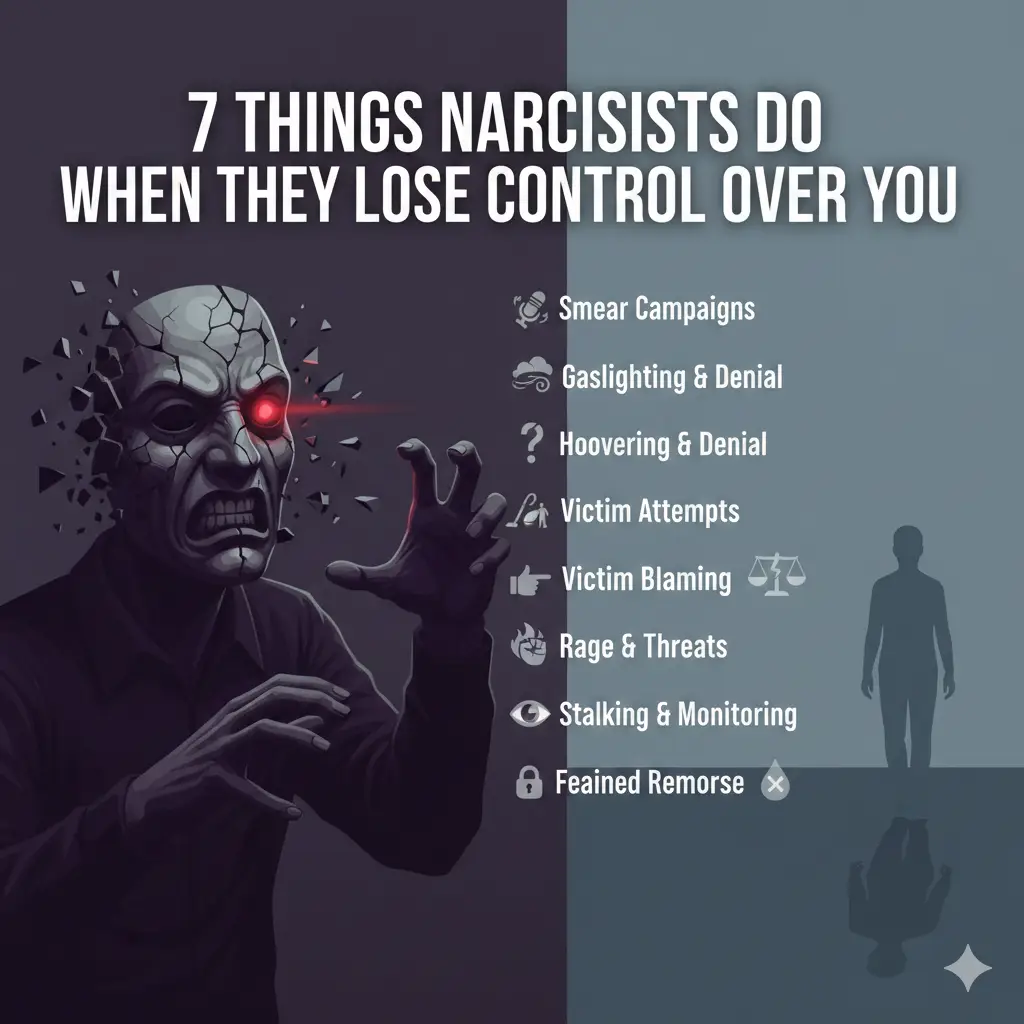
7 Things Narcissists Do When They Lose Control Over You
Have you ever felt that knot in your stomach when someone close to you starts acting out of character? Maybe you have a friend or boyfriend who is mean one day and super nice the next. Everything feels wrong and mixed up.
If you are reading this, you think, “Is this person a narcissist?” Now, when you say “no” more or walk away a little, they get louder and madder. This story tells you 7 things narcissists do when they lose control of you. We use easy words so you can see the bad tricks fast.
Real girls and boys have lived this, and smart helpers wrote about it too. This will help you know what is happening and find your happy peace again. Remember, recognizing these moves isn’t about blame—it’s about healing. You’re not alone; millions face this every year. Let’s dive in.
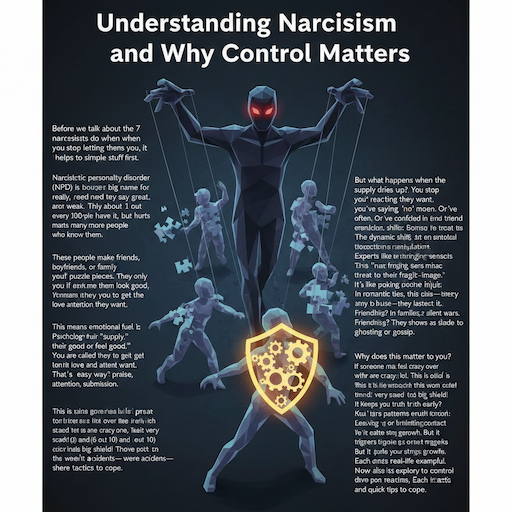
Understanding Narcissism and Why Control Matters
Before we talk about the 7 things narcissists do when you stop letting them boss you, it helps to know the simple stuff first.
Narcissistic personality disorder (NPD) is a big name for people who really, really need others to say they are great. They are scared to look weak.
Only about 1 out of every 100 people have it, but it hurts many more people who know them.
These people make friends, boyfriends, girlfriends, or family feel like puzzle pieces. They only want you if you make them look good or feel good.
You are called their “supply.” That means they use you to get the love and attention they want.
That’s the easy way to understand it! This means emotional fuel: praise, attention, submission.
But what happens when the supply dries up? You stop reacting the way they want. Maybe you’ve started saying “no” more often. Or you’ve confided in a trusted friend about the emotional manipulation. Suddenly, the dynamic shifts. The narcissist senses the narcissist losing control, and panic sets in. This isn’t love turning sour; it’s a threat to their fragile self-image.
Experts like those at Psychology Today describe this as the “narcissistic injury.” It’s like poking a bruise—they lash out to protect it. In romantic ties, this can mimic controlling behavior gone wild. In families, it shows as silent wars. Friendships? They fade into ghosting or gossip.
Why does this matter to you? If someone makes you feel crazy over and over again with their lies, you are not the crazy one.
This is called gaslighting, and it hurts a lot.
Many people who went through this feel very scared (7 out of 10) and very sad (6 out of 10).
Knowing the truth is like having a big shield. It keeps you safe and strong! But spotting the patterns early? That’s your path to freedom. As you read on, think of times you’ve felt confused or small. Those weren’t accidents—they were tactics.
And here’s a reassuring truth: Leaving or limiting contact often triggers the worst reactions. But it also sparks your strongest growth. You’re not “easy to control anymore,” and that’s powerful. Now, let’s explore the 7 things narcissists do when they lose control over you. Each one includes real-life examples, why it happens, and quick tips to cope.
7 Things Narcissists Do When They Lose Control Over You
When a narcissist’s reaction to rejection hits, their playbook flips from charm to chaos. These aren’t random acts; they’re desperate bids to rewind the clock. Based on survivor stories and psychological patterns, here are the top seven moves. We’ll keep it straightforward—no jargon, just clarity.
1. They Unleash Narcissistic Rage
Picture this: You’ve finally told your partner, “I need space to think.” Instead of respect, you get a storm. Doors slam. Words fly like daggers: “After everything I’ve done for you?” This is narcissistic rage—raw, explosive anger when their ego cracks.
Why does it happen? Control is their oxygen. Losing it feels like drowning. Research from the American Psychological Association links high narcissism to aggression spikes, especially under threat. In one study, 65% of narcissists showed elevated hostility when rejected. It’s not about you; it’s their inner child’s tantrum, dressed as adult fury.
Real example: Sarah, a teacher from the UK, shared how her ex-husband flipped during their breakup. “He threw my books across the room, screaming I was ‘ruining his life.’ It was terrifying, but I saw it for what it was—his fear.” This echoes toxic ex patterns many face post-split.
Coping tips:
- Stay safe first: If rage turns physical, call a hotline like the National Domestic Violence Hotline (1-800-799-7233 in the US).
- Document everything: Texts, voicemails—build your record.
- Ground yourself: Breathe deep. Remind: “This is their storm, not my truth.”
By naming it narcissistic rage, you strip its power. You’re not the villain; you’re the one breaking free.
2. They Start Hoovering Behavior
Ever feel sucked back into a mess you escaped? That’s hoovering behavior—named after vacuum cleaners, because they try to pull you in with false promises. One day, silence. The next? Flowers, apologies, “I’ve changed!”
This tactic thrives on your doubt. When a narcissist loses control, they dust off old charms. Per survivor forums on Reddit, 80% report hoovering attempts within weeks of going low-contact. It’s emotional manipulation at its sneakiest, preying on hope.
Take Lisa’s story. After leaving her controlling partner, he showed up at her job with tickets to her dream concert. “It felt like old magic,” she said. But weeks later, the cycle restarted. This is common in narcissist breakup warning signs—a brief glow to mask the void.
Why it works (until it doesn’t): Your brain craves closure. But true change? Rare without therapy. Only 20% of narcissists seek help, stats show.
Protect yourself:
- Block and gray rock: No response is your best reply. Be boring as a rock.
- Journal the red flags: List past hurts to counter nostalgia.
- Lean on support: Tell a friend, “If I waver, remind me why I left.”
Spotting hoovering behavior early saves heartache. You’ve outgrown the game—don’t step back in.
3. They Ramp Up Gaslighting in Relationships
“You never said that.” “You’re imagining things.” Sound familiar? Gaslighting in relationships twists your reality until you question everything. When control slips, they double down, making you the “crazy” one.
Rooted in denial, these psychological abuse tactics erode trust. The term comes from the 1944 film Gaslight, where a husband dims the lights and blames his wife. Today, it’s epidemic: 74% of abuse survivors report gaslighting.
Here is a story about a mom named Maria who lives in Canada.
Her sister acts super nice but says mean things sneakily. Maria asked her sister, “Did you borrow my money?” Her sister said, “No, I never did that!” even though she really did.
She pretended it never happened. That is sneaky and not fair. “She said I was ‘paranoid’ and turned our family against me.” This isolates a key manipulation tactic move.
Break free with these steps:
- Trust your gut: Write facts daily—what happened, not their spin.
- Affirm: “My memory is valid.” Say it aloud.
- Seek validation: Therapy or groups like those on Shaneen Megji’s blog offer solidarity1.
Gaslighting in relationships dims your light, but truth reignites it. You’re seeing clearly now.
4. They Launch a Smear Campaign
Whispers spread: “She’s unstable.” “He cheated first.” A smear campaign poisons your circle when the narcissist can’t win directly. It’s revenge via reputation, hitting where it hurts—your social world.
This narcissistic behavior protects their image. Studies link it to 50% of post-breakup conflicts. On X (formerly Twitter), users share how exes twist stories to mutual friends.
Real tale: Tom’s boss, after a promotion snub, told colleagues Tom was “unreliable.” It costs alliances. Classic toxic relationship patterns.
Defend wisely:
- Don’t engage: Arguing fuels the fire. Share your side calmly with key people.
- Build your tribe: Nurture true allies who know your character.
- Legal check: If it escalates to harassment, consult pros.
A smear campaign tests bonds, but real ones hold. Rise above—you’re unbreakable.
5. They Use Emotional Blackmail
Guilt trips, threats: “If you leave, I’ll hurt myself.” Emotional blackmail weaponizes feelings to chain you. Losing grip? They pull every lever.
Common in narcissistic personality disorder, it preys on empathy. Hotline data shows 40% of calls involve suicide threats as manipulation.
Jen’s ex texted: “Life’s not worth it without you.” She rushed back—only for abuse to resume. Heartbreaking warning signs that a narcissist is trying to regain control.
Counter it:
- Call the bluff: Inform authorities if threats are real; don’t play hero.
- Set scripts: “I care, but I’m not responsible for your choices.”
- Self-care ritual: Walk, call a friend—recenter.
Emotional blackmail binds, but boundaries cut loose. Choose you.
6. They Turn to Stalking and Surveillance
Eyes everywhere: Checking your phone, driving by your home. Stalking enforces invisible chains when direct control fails. It’s controlling behavior digitized.
Prevalence? 1 in 6 women face it post-relationship. Reddit threads buzz with stalking tales after no-contact.
From Emma: Her ex friended “friends” on social media to spy. “I felt watched, even alone.”
Safeguard:
- Tech hygiene: Change passwords, go private, use apps like Life360 for safety (not them).
- Report: Police logs build cases.
- Ally network: Share locations with trusted ones.
Stalking screams desperation. Your privacy? Non-negotiable.
7. They Fake Change with Love-Bombing
Bombs of affection: Gifts, vows, “soulmate” talk. Love-bombing restarts the cycle, masking the void of lost power.
It’s manipulation tactics 101—intense early, then withdraw. 70% of survivors recall it as the “hook.”
2Alex’s girlfriend flooded him with letters post-fight. “It worked—until the mask slipped.” Seethis Medium piece for more on reeling back.
Spot and stop:
- Pause and reflect: Is it consistent, or convenient?
- Demand proof: Therapy records, not words.
- No-contact rule: The only true test.
Love-bombing dazzles, but real love builds steadily. You’ve earned that.
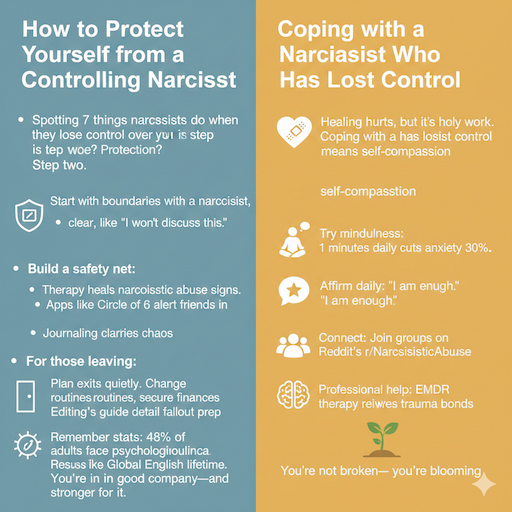
How to Protect Yourself from a Controlling Narcissist
Spotting 7 things narcissists do when they lose control over you is step one. Protection? Step two. Start with boundaries with a narcissist, clear, firm lines like “I won’t discuss this.”
Build a safety net: Therapy heals narcissistic abuse signs. Apps like Circle of 6 alert friends in crises. Journaling clarifies chaos.
For those leaving: Plan exits quietly. Change routines, secure finances. Resources likeGlobal English Editing’s guide detail fallout prep3.
Remember stats: 48% of adults face psychological aggression lifetime. You’re in good company—and stronger for it.
Coping with a Narcissist Who Has Lost Control
Healing hurts, but it’s holy work. Coping with a narcissist who has lost control means self-compassion. Try mindfulness: 10 minutes daily cuts anxiety 30%.
- Affirm daily: “I am enough.”
- Connect: Join groups on Reddit’s r/NarcissisticAbuse.
- Professional help: EMDR therapy rewires trauma bonds.
You’re not broken—you’re blooming.
The Road to Empowerment After Narcissistic Abuse
You’ve navigated the storm. Now, thrive. How to recognize a narcissist when they lose control equips you for future ties. Screen for red flags: Quick intensity? Run.
Celebrate wins: That first boundary? Victory. Share stories—validation heals.
Quotes inspire: “The opposite of control is trust.” – Unknown. Trust yourself first.
FAQs
What if I see these signs that a narcissist is losing control over me?
Put your safety first every time. Write down what happens, save messages, and tell safe friends or family. These big reactions mean it’s time to stay far away and keep them out of your life.
How do narcissists act after a breakup?
They might tell lies about you to everyone (that’s a smear campaign) or try to suck you back in with sweet words and gifts (that’s hoovering). The best fix is no-contact—no calls, no texts, nothing. That stops their game.
What should I do when a narcissist can’t manipulate me anymore?
Stay strong and keep saying no. Don’t explain too much—just short answers or silence. Go to therapy to feel like you again, heal the hurt, and build a happy, peaceful life without them. You’ve got this!
Conclusion
We are going to look at 7 things narcissists do when you say “no more” and they can’t boss you anymore. They might yell, get super mad, or suddenly act extra nice and give you lots of love. All that crazy stuff? It shows who they really are—not who you are. You have learned the tricks they use to mess with your feelings. Now you know the signs, and you have strong walls (we call them boundaries) to keep you safe.
You are smart, and you are free! This isn’t the end of pain—it’s the dawn of peace. Survivors worldwide echo: Freedom tastes sweet after the fight.
As you close this, reflect: What one step will you take today toward healing? Share in the comments, your voice might light someone’s path.

Pingback: Liomirajkoz: Meaning, Concept, and Why It’s Gaining Attention - LeatHeling