

Ultimate Guide to Raphelopsis: The Perfect Evergreen Flowering Shrub for Your Garden
Rhaphiolepis is a wonderful plant that many gardeners love. It is also known as Indian hawthorn or Rhaphiolepis indica. This evergreen flowering shrub stays green all year and puts on a pretty show of pink or white flowers in spring. If you want an easy plant that looks great in your yard, Rhaphiolepis is a top choice. It works well for home gardeners who need simple care tips, and for landscaping fans who want ideas for borders and hedges.
This guide will help you learn all about Rhaphiolepis. We will cover how to grow it, care for it, and use it in your garden. It is perfect for warm climates and needs little work once it settles in.
What is raphelopsis? A Simple Overview of This Genus
Rhaphiolepis is a group of evergreen shrubs and small trees from the Rosaceae family. The most common one is Rhaphiolepis indica, called Indian hawthorn. Even though the name has “Indian,” it comes from Asia, like China, Japan, and Korea.
These plants have shiny, leathery leaves that stay green all year. They grow slowly into a nice, rounded shape. In spring, they bloom with clusters of fragrant flowers that can be white or pink. After the flowers, small blue or black berries appear. Birds love these berries!
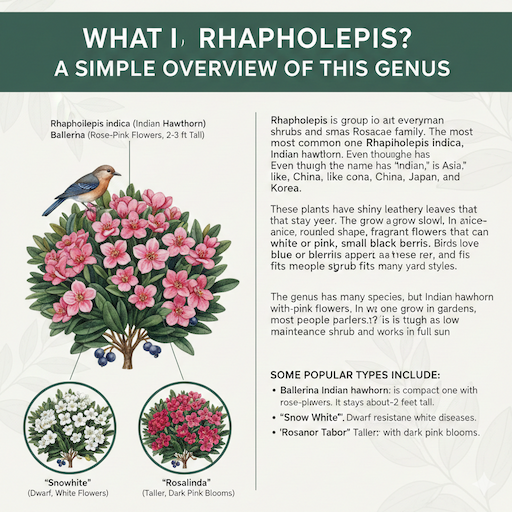
The genus has many species, but Indian hawthorn is the one most people grow in gardens. It is tough and fits many yard styles. It is great as a low maintenance shrub and works in full sun.
Some popular types include:
- Ballerina Indian hawthorn: A compact one with rose-pink flowers. It stays small, about 2-3 feet tall.
- ‘Snow White’: Dwarf with white flowers.
- ‘Eleanor Tabor’: Good resistance to diseases.
- Rosalinda Indian hawthorn: Taller, with dark pink blooms.
Rhaphiolepis plants are not invasive and are safe for pets and kids. Wikipedia1
Why Choose raphelopsis for Your Garden?
Many people pick Rhaphiolepis because it is easy to grow. Here are some big reasons:
- Evergreen: Keeps leaves all winter for year-round green.
- Flowering: Pretty spring flowering bushes with sweet-smelling blooms.
- Drought tolerant: Once established, is Indian hawthorn drought tolerant? Yes! It handles dry times well.
- Low maintenance: Needs little pruning or care.
- Versatile: Good for shrubs for hedges and borders, foundations, or containers.
- Pest resistant: Many types fight off bugs and diseases better than others.
- Wildlife friendly: Berries feed birds, flowers attract bees.
It suits warm areas like USDA zones 8-10. Perfect for landscape shrubs for warm climates and coastal landscape plants because it handles salt.
For home gardeners, it gives beauty without hard work. Landscaping fans love it for Rhaphiolepis hedge landscaping ideas. Plant shoppers like the wide varieties, like ballerina Indian hawthorn.
How to Grow Rhaphiolepis Plant: Step-by-Step Guide
Ready to add Rhaphiolepis to your yard? Follow these easy steps for how to grow Raphelopsis plant.
- Pick the right spot: Choose full sun for the best flowers. It can take some shade, but more sun means more blooms.
- Prepare the soil: Use well-drained soil. Best soil for Indian hawthorn is average garden soil. It likes a slightly acidic to neutral pH. Add compost if the oil is poor.
- Plant at the right time: Early spring is best.
- Dig the hole: Make it twice as wide as the root ball, but the same depth.
- Place the plant: Set it in, fill with soil, and water well.
- Space correctly: Check the Indian hawthorn plant spacing guide. For hedges, plant 18-24 inches apart. For single plants, give 3-6 feet.
New plants need regular water to start growing roots. After a year, they become drought tolerant shrubs. The Spruce2
Rhaphiolepis Shrub Care Guide: Keep It Healthy and Happy
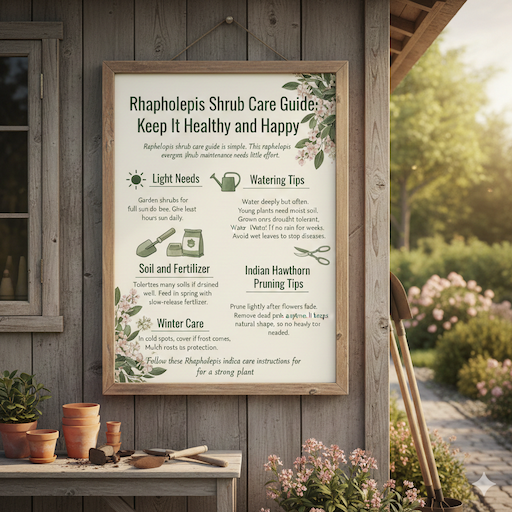
Raphelopsis shrub care guide is simple. This raphelopsis evergreen shrub maintenance needs little effort.
Light Needs
Garden shrubs for full sun do best here. Give at least 6 hours of sun daily.
Watering Tips
Water deeply but not often. Young plants need moist soil. Grown ones are drought tolerant. Water if no rain for weeks. Avoid wet leaves to stop diseases.
Soil and Fertilizer
Tolerates many soils if drained well. Feed in spring with slow-release fertilizer.
Indian Hawthorn Pruning Tips
Prune lightly after flowers fade. Remove dead parts anytime. It keeps its natural shape, so no heavy cuts are needed.
Winter Care
In cold spots, cover if frost comes. Mulch roots for protection.
Follow these Rhaphiolepis indica care instructions for a strong plant.
Common Problems and Indian Hawthorn Shrub Disease Prevention
Rhaphiolepis is tough, but watch for issues.
- Leaf spot: A Fungus makes spots on leaves. Prevent by good air flow and dry leaves.
- Pests: Aphids or scale sometimes come. Use neem oil if needed.
- Root rot: From too much water. Ensure good drainage.
Pick resistant types like ‘Eskimo’ or ‘Georgia Petite’ for fewer problems. These are pest resistant landscape plants.
Raphelopsis Plant for Landscaping: Creative Ideas
Rhaphiolepis shines in yards. Here are ideas for hawthorn shrub landscaping.
- Hedges and borders: Plant in rows for low shrubs for hedges and borders.
- Foundation plants: Hide house bases with compact ornamental shrubs.
- Mass plantings: Group for color in spring.
- Containers: Grow on patios.
- Mixed borders: Pair with other evergreen flowering shrubs for small gardens.
It fits ornamental evergreen shrub designs. Use for flowering evergreen shrub accents.
Popular Varieties of Indian Hawthorn Shrub
Many choices exist:
- Ballerina Indian hawthorn: Small, pink flowers, great for small spots.
- ‘Indian Princess’: Pink and white flowers, 4 feet tall.
- ‘Snow White’: Dwarf, white blooms.
- ‘Rosalinda’: Tall, dark pink.
These are all low maintenance shrubs. Monrovia Nursery3
Propagating Rhaphiolepis
Make more plants from cuttings in summer. Dip in hormone, plant in mix, keep moist. Roots form in weeks.
Rhaphiolepis in Containers
Use big pots with drainage. Good for decks.
Benefits for Wildlife and Environment
Flowers help pollinators. Berries feed birds. Drought tolerant saves water.
FAQs
Is Indian hawthorn drought tolerant?
Yes, once established. Indian hawthorn is quite drought tolerant after it gets well established. In the first year or two, give it regular water to help the roots grow strong. Once the plant is settled, it can handle dry spells and needs much less watering, making it a great choice for low-water gardens.
How far apart to plant Indian hawthorn?
For a nice thick hedge, plant Indian hawthorn 18 to 24 inches apart. This close spacing helps the plants grow together quickly and form a full, dense look. If you want them as individual shrubs, space them 3 to 4 feet apart so each one has room to spread out nicely.
When does it bloom?
Indian hawthorn usually blooms in spring with pretty clusters of white, pink, or red flowers. Many types also give a second, smaller bloom in fall if the weather stays mild. The flowers are small but showy and attract bees and butterflies to your yard.
Can it grow in shade?
Indian hawthorn grows best in full sun, where it gets at least 6 hours of direct sunlight each day. It can handle partial shade, like morning sun and afternoon shade, but it may have fewer flowers. Too much deep shade makes the plant grow leggy and weak, so pick a sunny or mostly sunny spot for the healthiest growth.
Conclusion
Raphelopsis, or Indian hawthorn, is an amazing evergreen flowering shrub. It brings beauty with little work. From pretty flowers to tough nature, it fits many gardens. Follow this guide for raphelopsis success. You will enjoy its green leaves, blooms, and easy care for years.
