
What Did John B. Watson and Rosalie Rayner Demonstrate with Their Studies of Little Albert?
Have you ever wondered how fears start? What did John B. Watson and Rosalie Rayner demonstrate with their studies of Little Albert? They showed that people can learn fear through classical conditioning. This famous 1920 experiment used a baby named Albert to prove emotions like fear are not just born in us. They can be taught, just like a dog learns to salivate in Pavlov’s work.
John B. Watson led the study. He wanted to build on Pavlovian conditioning. Rosalie Rayner helped him. Their work became a key part of behaviorism psychology experiment. It taught students about conditioned emotional response. In this article, we break it down simply. You will see the steps, results, and why it matters for introductory psychology classes.
Who Were John B. Watson and Rosalie Rayner?
John B. Watson started behaviorism. He believed psychology should study only what we can see – behaviors, not thoughts. Born in 1878, Watson worked at Johns Hopkins University. He said, “Give me a dozen healthy infants… and I’ll guarantee to take any one at random and train him to become any type of specialist I might select.” This bold idea drove the Little Albert experiment.
Rosalie Rayner was Watson’s student and later his wife. She helped run the tests. Their partnership mixed science and personal life. Watson lost his job because of their affair, but the study lived on. It showed John B. Watson classical conditioning in action with humans.
The Setup of the Little Albert Experiment
The study happened in 1920. Albert was a healthy 9-month-old baby. His mom worked at the hospital where the tests took place. Watson and Rayner picked him because he seemed calm.
First, they tested Albert’s reactions. He played with a white rat, a rabbit, and even cotton wool. No fear at all. This was the baseline.
Key Terms in the Experiment
- Unconditioned stimulus (US): A loud noise from a steel bar hit with a hammer. It made Albert cry naturally.
- Unconditioned response (UR): Albert’s natural crying and fear to the noise.
- Conditioned stimulus (CS): The white rat, which started neutral.
- Conditioned response (CR): Fear of the rat after pairing.
These terms link to classical conditioning example.
Step-by-Step: How They Conditioned Fear
Watson and Rayner followed clear steps. Here is how they created a conditioned emotional response:
- Show the rat alone: Albert touched and played with it. No fear.
- Pair rat with noise: When Albert reached for the rat, they banged the bar. He jumped and cried.
- Repeat the pairing: They did this seven times over a week.
- Test the rat alone: Albert now cried and crawled away from the rat. Fear was learned!
This proved fear conditioning in humans. The rat became a trigger for fear.
Results: More Than Just the Rat
The big surprise? Fear spread. This is stimulus generalization.
- Albert feared the rat.
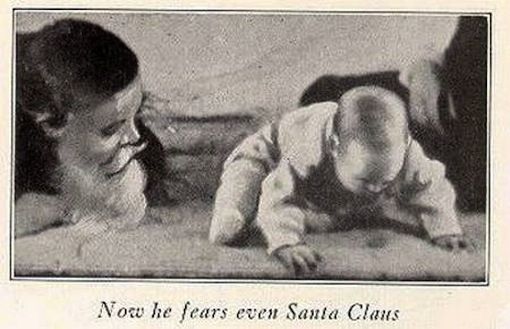
- He also feared a rabbit, a dog, and even a Santa mask with white beard.
- But he stayed calm with blocks or dark hair.
After five days, fear was still strong. After a month, it weakened a bit but did not vanish. They planned to remove the fear but never did. Albert left the study.
This Little Albert psychology study results showed emotions can generalize. It relates to emotional learning in infants.
Why What Did John B. Watson and Rosalie Rayner Demonstrate with Their Studies of Little Albert Matters for Behaviorism
What did John B. Watson and Rosalie Rayner demonstrate with their studies of Little Albert? They gave proof for behaviorism. Watson said environment shapes us, not genes or instincts. The study showed:
- Fears are learned, not inborn.
- Classical conditioning works on human emotions, not just reflexes.
- It built on Pavlov’s dogs but went to emotional conditioning.
Students learn this as a top Watson and Rayner study summary. It shows how did Watson and Rayner show classical conditioning in humans.
Links to Real Life
- Phobias like fear of spiders might start from one bad event. Learn more about atychiphobia explained – fear of failure.
- Ads pair products with happy feelings – same idea! Check advertising feedbuzzard tips for modern examples.
Ethical Problems in the Study
Today, we see big issues. The ethics of the Little Albert experiment include1:
- No consent from Albert’s mom for fear.
- They caused harm and did not fix it.
- Albert was too young to agree.
Modern rules ban this. But back then, ethics were loose. This teaches about ethical issues in psychological research. For more on mental health ethics, see Kentucky Counselling Center.
What Happened to Little Albert?
Albert’s real name was Douglas Merritte. He died young at age 6 from brain issues. Some say the experiment hurt him long-term, but proof is weak. This ties into weight management and health discussions.
How the Little Albert Experiment Teaches Classical Conditioning
Break it down like this:
| Step | What Happened | Term |
| Before | Rat = fun | Neutral stimulus |
| During | Rat + loud noise = cry | Pairing |
| After | Rat = cry | Conditioned response |
This matches Pavlovian conditioning. It is a core classical conditioning example.
Criticisms and Modern Views
Not perfect. Critics say:
- Only one baby – small sample.
- Maybe Albert had issues already.
- Experimenter bias psychology – Watson wanted it to work.
Still, it inspired therapy. Today, we use conditioning to treat fears safely. Explore high blood pressure management or diabetes for behavior change links.
Connections to Other Ideas
The study links to stimulus generalization. Fear spread to furry things. It also shows early behaviorist research.
For more on behavior, check Simply Psychology’s guide2. Or see flashcards on Quizlet3. Dive deeper into learning with family life cycle theory.
FAQs: Common Questions from Students
What was the purpose of the Little Albert experiment in psychology?
To show fears can be learned via classical conditioning.
How did Little Albert show stimulus generalization?
Fear moved from rat to rabbit and masks.
What does the Little Albert experiment teach about learned fear?
One scary event can create lasting phobias.
How does the Little Albert study relate to behaviorism?
It proved the environment shapes emotions. See personal finance made easy for behavior in money habits.
In Conclusion: The Lasting Impact
What did John B. Watson and Rosalie Rayner demonstrate with their studies of Little Albert? They proved classical conditioning creates fear in humans. Through simple pairing, a neutral rat became scary. This Little Albert experiment summary highlights conditioned emotional response and stimulus generalization. It shaped behavioral psychology and warns about ethics.
The study remains a textbook star. It shows how we learn emotions. For more on growth, read dreamwithjeff com. What fear have you learned in life? Share in the comments!
References
- Verywell Mind – The Little Albert Experiment – Explains steps and criticisms simply. ↩︎
- Simply Psychology – Little Albert Experiment – Clear summary with diagrams for students. ↩︎
- Quizlet – Psychology Chapter 6 Flashcards – Quick review for exams on conditioning. ↩︎
