
What Is a Dangerous PSA Level After Prostate Removal? Your Clear Guide
What Is a Dangerous PSA Level After Prostate Removal? Your Clear Guide
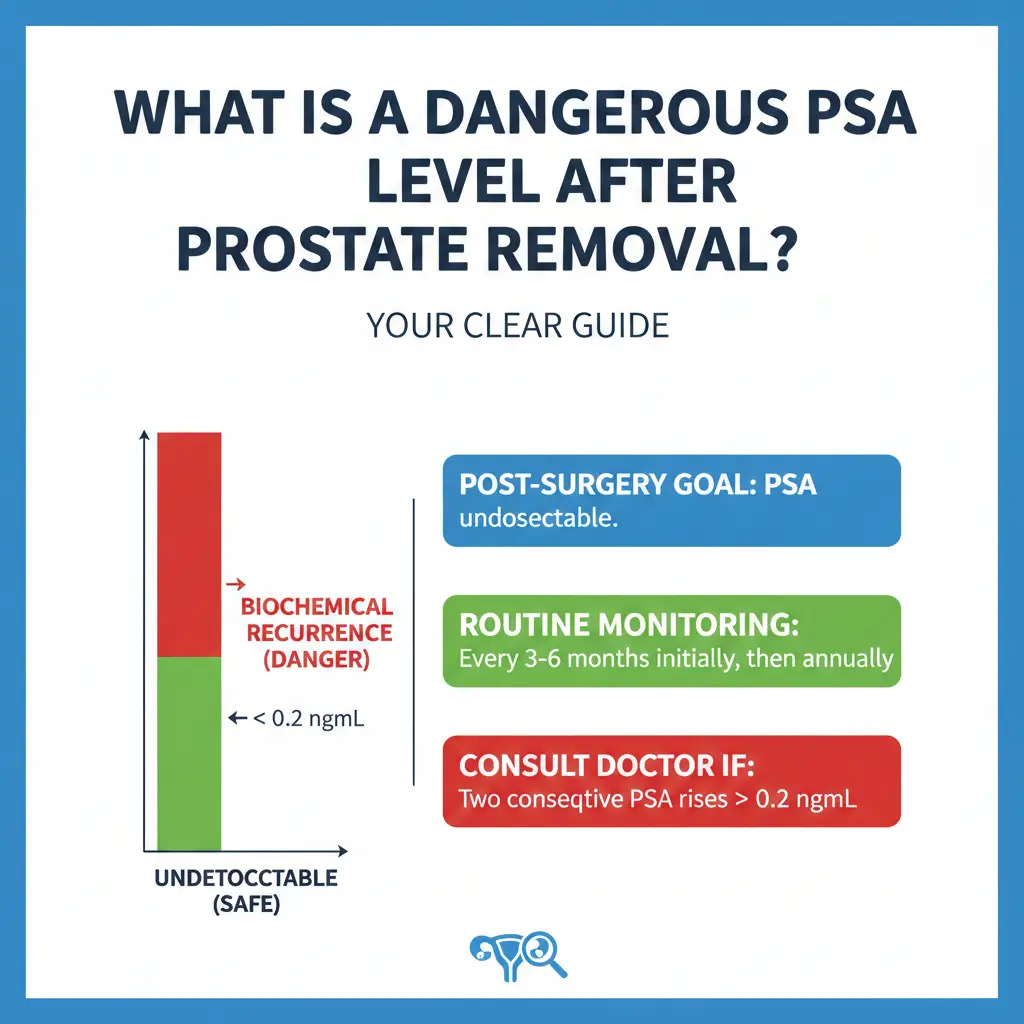
You face surgery for prostate cancer. The prostate comes out. Relief hits. But then comes the wait for PSA tests. What is a dangerous PSA level after prostate removal? It worries many men. After radical prostatectomy, your PSA should drop fast to near zero. Why? The prostate makes PSA. No prostate means no PSA. But if it lingers or climbs, red flags wave. A level at 0.2 ng/mL or higher—checked twice—often means biochemical recurrence. That signals cancer may return. Don’t panic yet. Many men catch it early and act. This guide breaks it down. Simple words. Key facts. You stay in control.
Prostate cancer hits 1 in 8 men, per the American Cancer Society. Over 300,000 new cases yearly in the U.S. Surgery cures many. But 20-40% see PSA rise in 10 years, notes Harvard Health. Knowledge eases fear. Let’s dive in.
Understanding PSA: The Basics Before and After Surgery
PSA stands for prostate-specific antigen. Your prostate gland pumps it out. It helps semen flow smoothly. In blood, low levels stay normal. High ones? They flag issues like cancer.
Before removal, docs screen with PSA. Levels over 4 ng/mL raise brows. But after prostatectomy, rules change. What is a dangerous PSA level after prostate removal? It shifts low. Undetectable—under 0.1 ng/mL—means success. Anything above? Check deeper.
History helps. PSA tests started in the 1980s. They cut deaths by spotting cancer early. Dr. Richard Ablin founded PSA in 1970. But docs like Dr. William Catalona pushed its use for screening. His work at Northwestern saved lives. Yet, over-testing led to tweaks. Now, shared decisions rule.
For you post-surgery: PSA half-life is 2-3 days. It clears quickly. By 6 weeks, it should vanish.
Link up: Explore prostate cancer screening basics for full history.
What Is a Normal PSA After Prostatectomy? Setting Expectations
What is normal PSA after prostatectomy? Aim for undetectable. That’s less than 0.1 ng/mL on standard tests. Ultrasensitive ones spot under 0.03 ng/mL. Why so low? No prostate cells left.
Stats show hope. 60-80% of men hit undetectable, per Mayo Clinic. That means low recurrence risk.
But normal varies. Labs differ. One man’s 0.05 is another’s undetectable. Always use the same lab.
Tips to track:
- Wait 6-8 weeks post-op for the first test.
- Fast if needed—ask your doc.
- Note meds; some skew results.
One man shared: “My PSA hit 0.01 in three months. Slept better that night.”
If yours stays low, cheer. It points to cure.
Tie in: Read Dr. Catalona’s post-op advice for expert monitoring.
PSA Levels After Prostate Removal: The Timeline
PSA levels after prostate removal drop sharp. Day one: Still high from old PSA. Week four: Near zero. Month two: Undetectable for most.
Watch the curve. Steady low? Good. Slow rise? Note it. Fast jump? Act.
Example: John, 62, had surgery. PSA fell to 0.02 at six weeks. Stayed there for years. Peace.
But rises happen. 30% see them by year five, says PCFA. Early catch helps.
Monitor smart:
- First test: 6-12 weeks.
- Then: Every 3-6 months for two years.
- Low risk? Yearly after.
Use ultrasensitive tests. They spot trends sooner.
Pro link: Check Ulta Lab’s PSA post-prostatectomy test for easy ordering.
What Is a Dangerous PSA Level After Prostate Removal? The Threshold
What is a dangerous PSA level after prostate removal? Experts say 0.2 ng/mL or higher—twice in a row. That’s a biochemical recurrence. It means cancer cells may lurk.
Why 0.2? The American Urological Association sets it. Below? Often benign tissue or error. Above? 50% chance of spread in five years, per MSKCC nomograms.
Not all rise doom. Slow ones—doubling over years—fares better than fast.
Biochemical recurrence PSA hits 20-40% post-surgery. But treatment cures many.
Quote from Dr. Catalona: “A PSA of 0.2 is low for a man with a prostate, but high without one.”
Stay calm. One blip? Retest. Trend up? See your urologist.
PSA Recurrence After Prostate Surgery: Spotting the Signs
PSA recurrence after prostate surgery sneaks in quiet. No pain. Just numbers climb.
Signs:
- From undetectable to 0.1, then 0.15.
- Doubling time under 12 months—worry more.
- Late rise, like year 10? Often local, treatable.
Case: Mike’s PSA hit 0.3 at year eight. Scans found bed recurrence. Radiation zapped it. PSA zero again.
Stats: 70% respond to salvage therapy if caught early, notes Harvard.
Act fast:
- Log every test.
- Track velocity—rise per year.
- Share with doc.
Health tie: Balance with high blood pressure management to ease stress.
Elevated PSA After Prostatectomy: Causes Beyond Cancer
Elevated PSA after prostatectomy isn’t always doom. Benign spots linger sometimes.
Causes:
- Tiny prostate tissue left—5-10% cases.
- Lab glitch—retest fixes.
- Inflammation or infection.
One study: 15% of “rises” prove false, per PubMed.
But rule out cancer. PSMA PET scans spot hidden spots at low PSA.
Reassure: Most elevations stay low and stable.
PSA Rising After Prostate Removal: When to Worry
PSA rising after prostate removal flags action. Worry at 0.2 confirmed. Or if doubling quick.
At what PSA level should I worry after prostate removal? Over 0.1 with trend. Under? Watch.
Example: Tom’s PSA crept to 0.15 over six months. Doc scanned. Clear. Kept tabs.
Stats: Shorter doubling time? 2x worse outlook, says ACS1.
Steps:
- Retest in 4-6 weeks.
- Image if over 0.2.
- Discuss therapy.
Wellness link: Try weight management to support recovery.
Biochemical Recurrence PSA: Decoding the Term
Biochemical recurrence PSA means PSA up after treatment. No symptoms yet. Just lab alert.
It predicts risk. MSKCC tools crunch age, Gleason score, PSA at rise. Say: 10-year death risk low if treated.
20% of cases stay “biochemical only”—no spread.

Treat early. Boosts cure odds 50%.
PSA 0.2 After Prostatectomy Recurrence: The Red Line
PSA 0.2 after prostatectomy recurrence—that’s the line. Two tests at or above? Recurrence likely.
But hope: Radiation works best here. 60% go undetectable.
One patient: “Hit 0.21. Zapped with beams. Clean since 2018.”
Undetectable PSA After Surgery: The Best Outcome
Undetectable PSA after surgery—celebrate! Under 0.1 means cells gone.
It drops risk to 5% in 10 years.
Keep testing. Life rolls on.
PSA Monitoring After Prostatectomy: Your Schedule
PSA monitoring after prostatectomy saves lives. Start at 6 weeks. Then quarterly.
High risk? Every 3 months. Low? Yearly.
Use the same lab. Track trends.
App tip: Log in a journal.
Health boost: Pair with diabetes checks if at risk.
Prostate Cancer Recurrence PSA Level: Long-Term View
Prostate cancer recurrence PSA level often stays low. 0.2-1.0 common at detect.
But watch doubling time. Under 6 months? Urgent.
15-year survival: 80% with treatment, per studies.
Why Is My PSA Detectable After Prostatectomy? Common Questions
Why is my PSA detectable after prostatectomy? Leftover tissue or early cells.
Don’t fret alone. 10% benign.
PSA Test Results After Prostate Removal Explained: Simple Breakdown
PSA test results after prostate removal explained: 0.00-0.1: Good. 0.1-0.2: Watch. Over 0.2: Act.
Velocity matters more than snapshots.
PSA Results for Prostate Cancer Survivors: Staying Vigilant
PSA results for prostate cancer survivors guide life. Low? Hike, travel. Rising? Plan.
Support groups help. Zero Cancer shines.
Post-Surgery Prostate Cancer Follow-Up Tests: Beyond PSA
Post-surgery prostate cancer follow-up tests: MRI, bone scans if PSA up.
Yearly DRE too.
Patient Guide to PSA After Radical Prostatectomy: Action Steps
Patient guide to PSA after radical prostatectomy:
- Know your baseline.
- Spot trends.
- Talk open with the doc.
Empower yourself.
Cancer link: Learn cervical cancer parallels for family.
Treatment Options for Rising PSA After Prostate Removal
Treatment options for rising PSA after prostate removal abound.
- Salvage Radiation: Zaps bed. Best under 0.5 ng/mL. 70% success.
- Hormone Therapy: Blocks fuel. Intermittent eases side effects2.
- Chemo: For spread. Docetaxel leads.
- New Drugs: Enzalutamide adds years.
Dr. Catalona notes: Start radiation at 0.2 for cure shots.
Side effects? Manage with exercise, diet.
One win: 50% stay PSA-free five years post-treatment.
PSA Doubling Time After Prostatectomy Prognosis: Key Predictor
PSA doubling time after prostatectomy prognosis ties to outcome. Over 24 months? Great. Under 12? Treat aggressively.
Tools like MSKCC predict: Enter age, PSA—get odds.
Dangerous PSA Levels After Prostate Cancer Surgery: Myths Busted
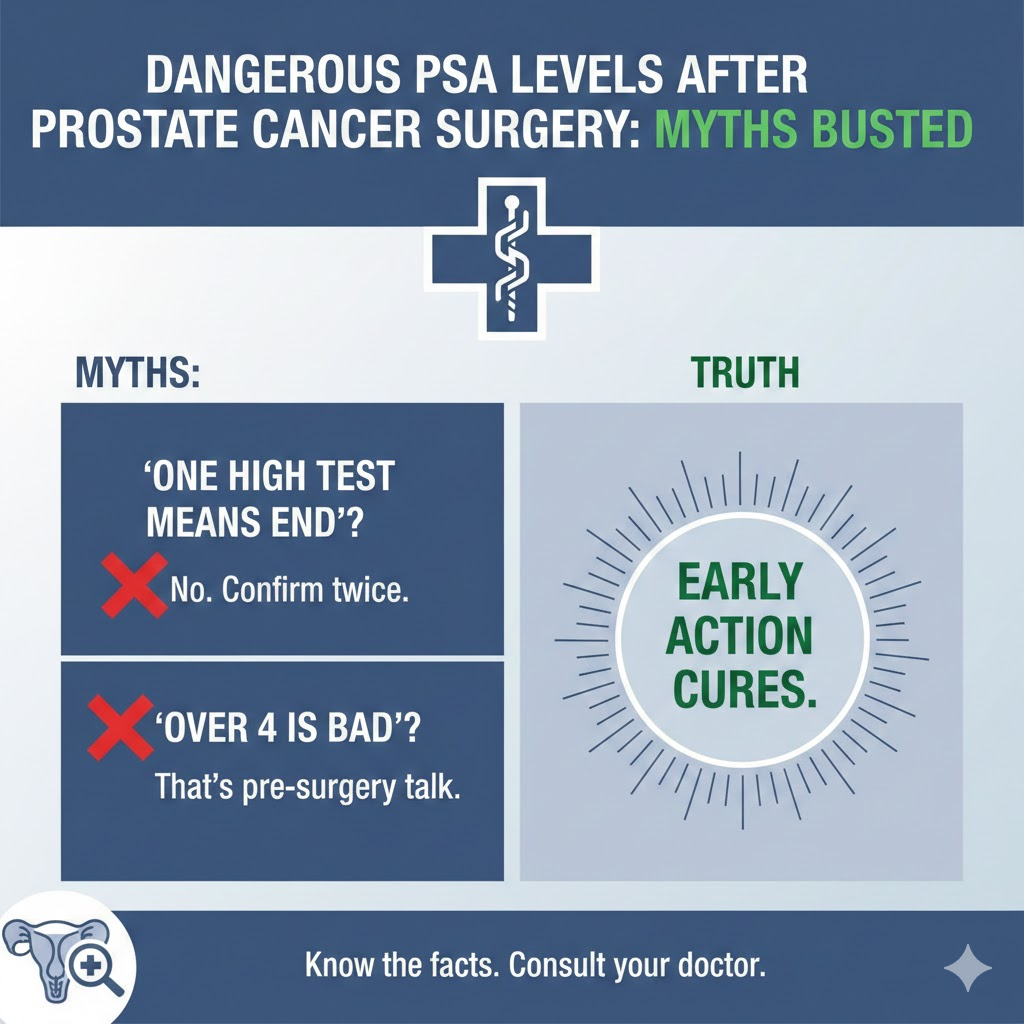
Dangerous PSA levels after prostate cancer surgery spark myths. “One high test means end”? No. Confirm twice.
“Over 4 is bad”? That’s pre-surgery talk.
Truth: Early action cures.
What Is a Dangerous PSA Level After Prostate Removal? Deep Dive
Back to core: What is a dangerous PSA level after prostate removal? It’s not sky-high numbers. It’s any rise from zero. Threshold: 0.2 ng/mL.
Why is it dangerous? Signals cells left or back. But 80% treatable if local.
Stats: Biochemical recurrence in 30%. Half need no more therapy.
Reassure: Many live full lives post-treatment.
Living Well: Tips for PSA Watchers
Stay strong:
- Eat greens, fish.
- Walk daily—cuts risk 20%.
- Join support—share stories.
Link: Ease heartburn with Prilosec guide.
FAQ – What Is a Dangerous PSA Level After Prostate Removal?
What is a dangerous PSA level after prostate removal?
A PSA of 0.2 ng/mL or higher, confirmed on two separate tests, is the most common threshold for biochemical recurrence. Many doctors act even earlier if the PSA is rising steadily.
What is a normal PSA after prostatectomy?
Undetectable PSA after surgery (less than 0.1 ng/mL with a standard test, or less than 0.03–0.07 ng/mL with an ultrasensitive test) is the goal and is considered completely normal.
Is 0.1 ng/mL dangerous after prostate removal?
Not by itself. A single reading around 0.1 ng/mL is common and often not cancer. Doctors watch for a clear upward trend or confirmation above 0.2 ng/mL.
My PSA is 0.15 after prostatectomy – should I worry?
Not yet. Elevated PSA after prostatectomy at this level happens in many men from leftover benign tissue. Retest in 3–6 months and track the trend.
What does PSA 0.2 after prostatectomy recurrence mean?
It usually means biochemical recurrence PSA has been reached. This is the official red-flag level used by the American Urological Association and most cancer centers.
Conclusion: Take Charge of Your PSA Journey
What is a dangerous PSA level after prostate removal3? It’s ≥0.2 ng/mL confirmed—a call to act, not despair. PSA after prostatectomy should stay undetectable. Rises like PSA rising after prostate removal or elevated PSA after prostatectomy need watch. But tools like PSA monitoring after prostatectomy and treatments for biochemical recurrence PSA empower you. Survivors thrive—80% long-term. Track smart. Talk boldly. Live full.
What’s your PSA story? Share below—we’re in this together.
References
- JustAnswer Urology. (Year). Rising PSA 11 Years Post-Surgery. ↩︎
- Dr. Catalona. (2021). Post-Operative Treatment FAQ. ↩︎
- WebMD. (2024). PSA Test and Levels Explained. ↩︎
